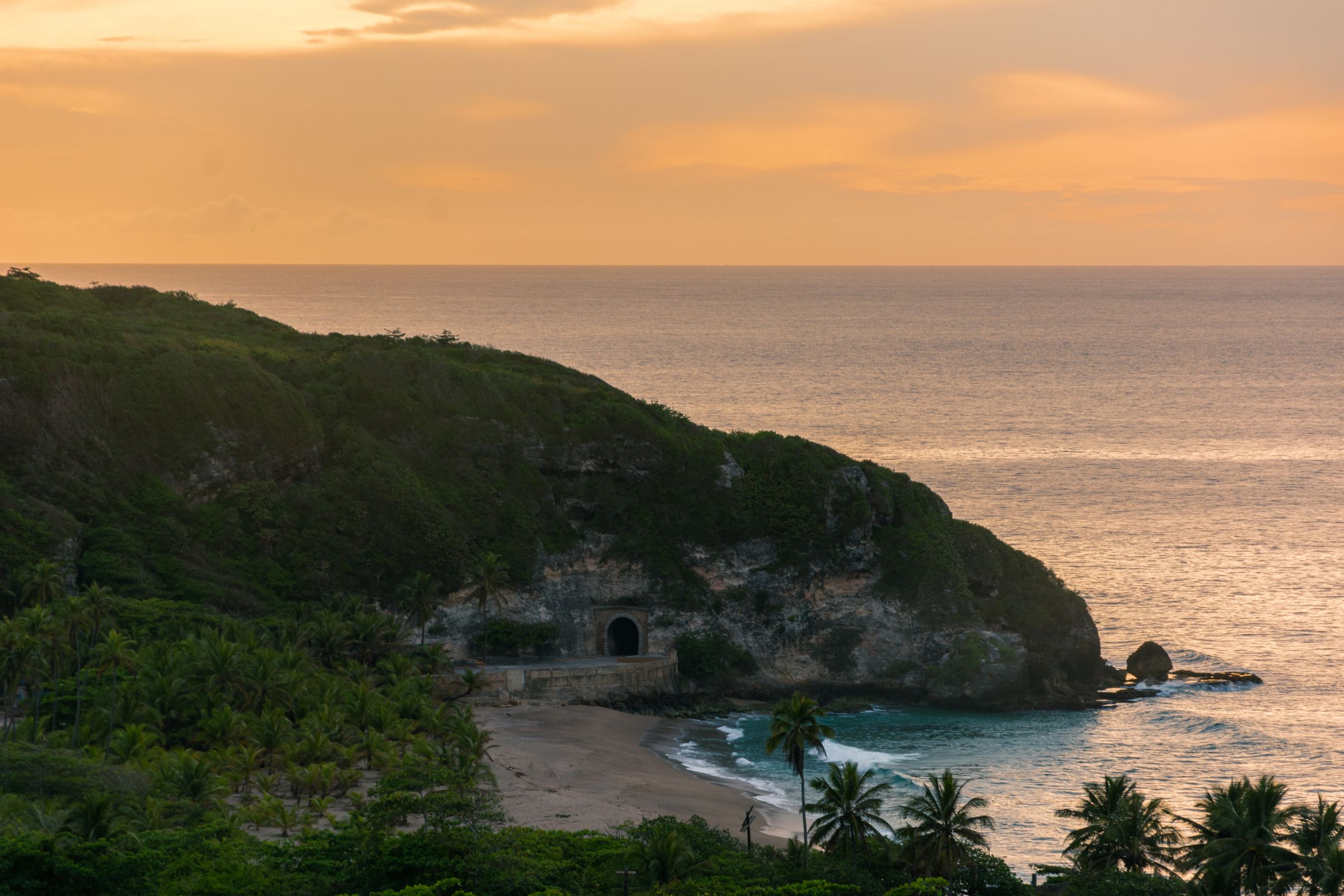
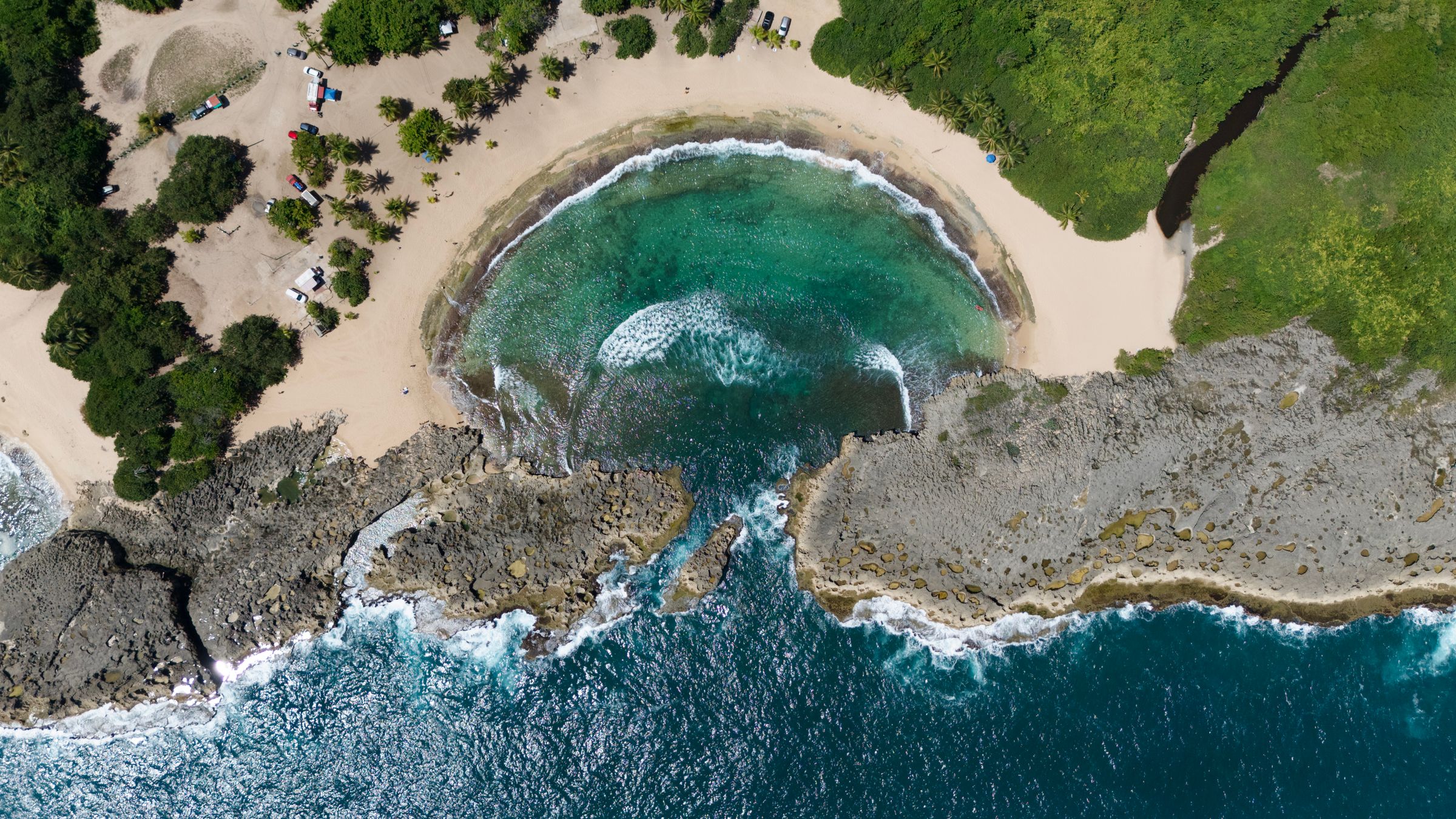
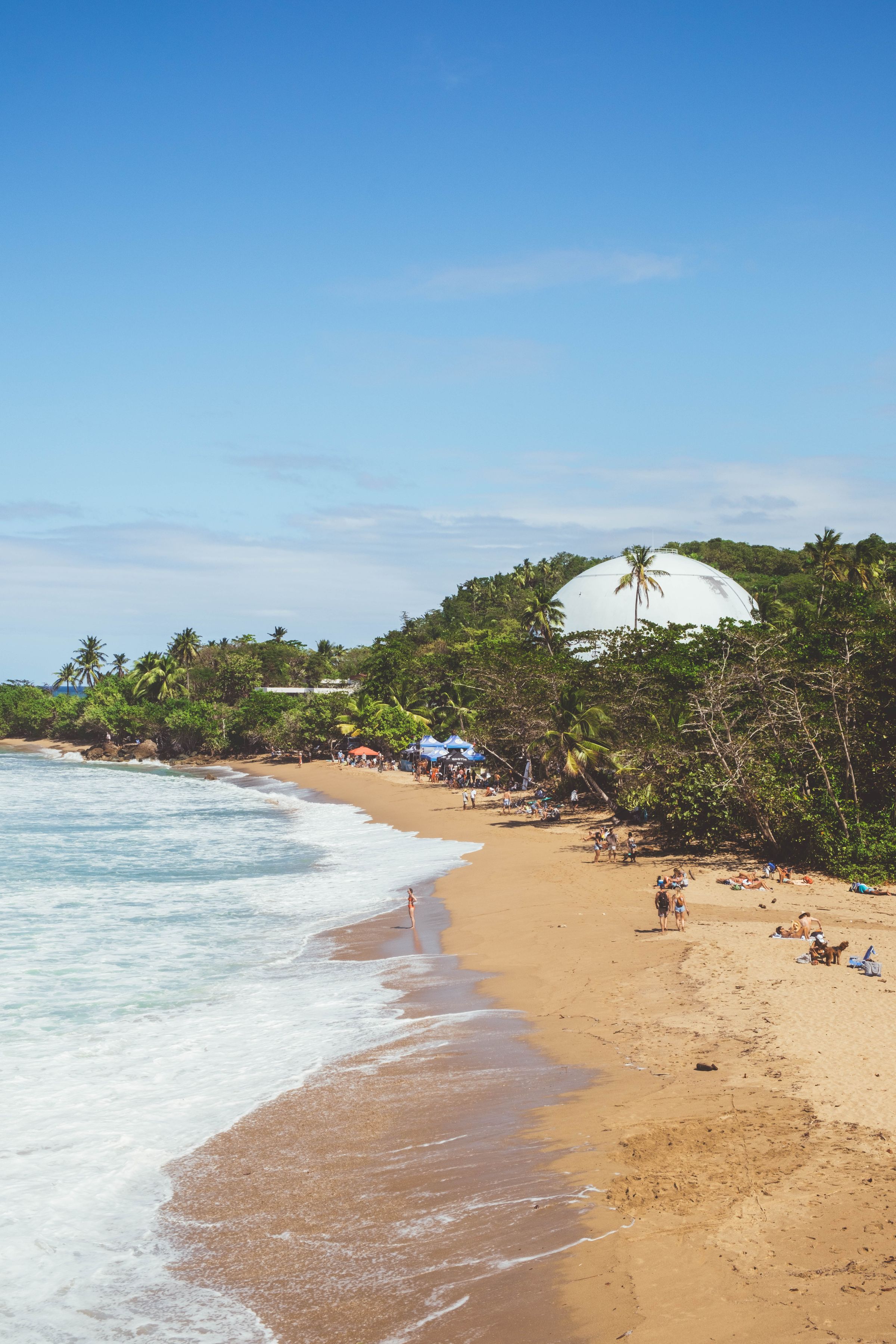
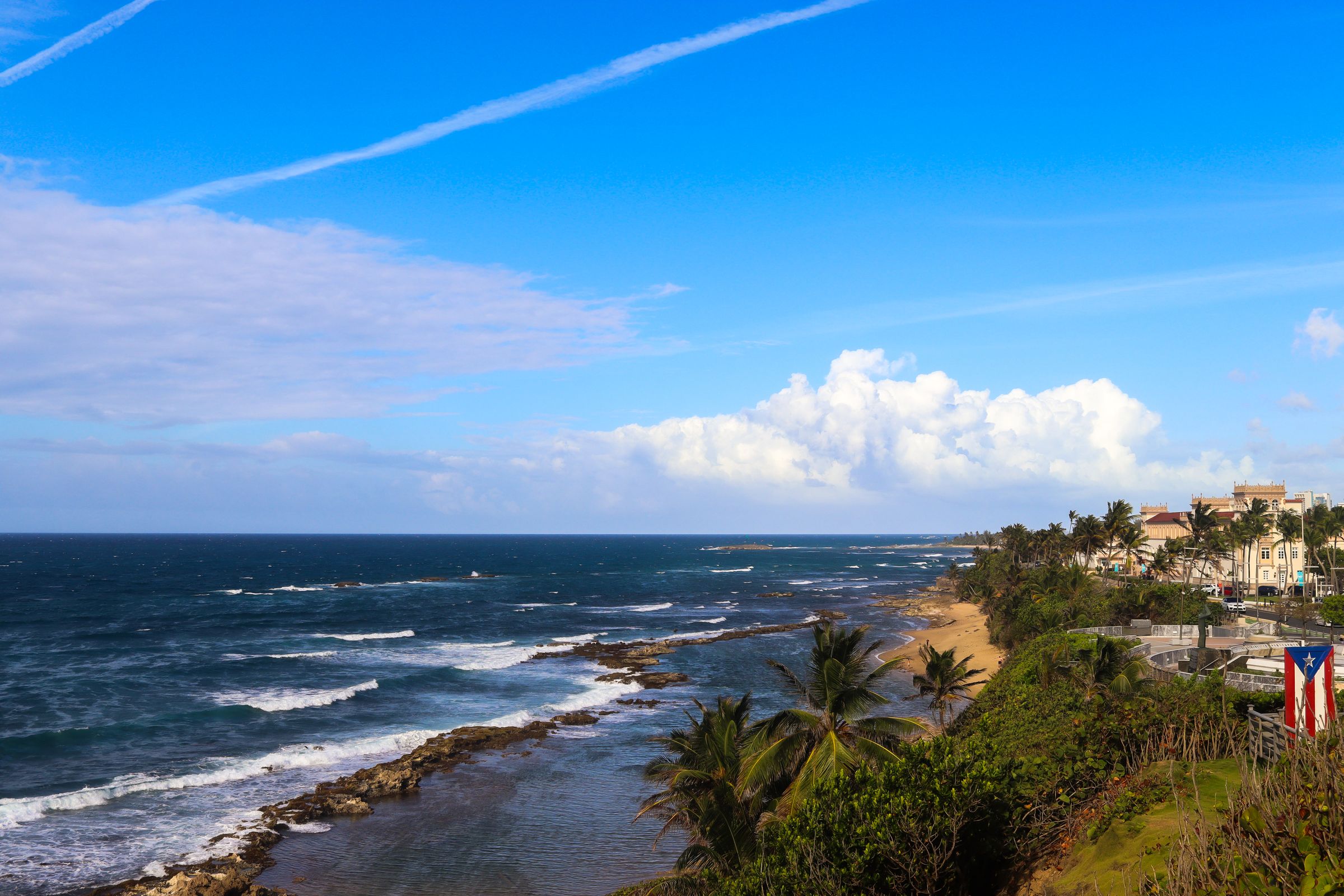
Most of Puerto Rico's coastline knows how to entertain. The Atlantic side, along Aguadilla, Isabela, and Rincón, never learned that skill, and shows no particular interest in learning it now. The waves that arrive here were generated by weather systems far out in open ocean, and they do not care what time a Collector intended to wake up. They simply keep coming, the way they have for longer than the island has had a name, and the towns along this coast long ago stopped trying to argue with them.
What that produces, instead of a resort strip, is a rhythm. Fishermen still leave before the sky has fully committed to morning, reading a swell the way a farmer reads a season. Surfers paddle out at first light not for an audience but because that is simply when the wind is calm enough to see clearly. Wind moves through the sea grapes along the bluffs the same unhurried way it moved through them a century ago, and the salt air does something to a person's sense of urgency that no amount of scheduling can undo.
There is a kind of listening this coast asks of a Collector that the rest of the island does not. Old San Juan rewards early risers with quiet streets. The coffee highlands reward patience with a view down a valley. The Atlantic asks something closer to surrender — to stop checking the time, to let a conversation that started after lunch simply continue until the light changes, to notice that the color of the water has shifted twice since breakfast and no one thought to mention it because no one needed to.
This is a working coast as much as a beautiful one. A boat returns with the day's catch and someone is already there to meet it, the way that transaction has happened for generations, unbothered by whether anyone is watching. A shaper is somewhere in a garage smelling of resin, finishing a board by hand for someone who will pick it up tomorrow. None of this was arranged for a Collector's benefit. It continues whether or not anyone comes to see it, which is precisely what makes it worth being received into.
By late afternoon, the light does something the House has never managed to describe adequately in a single sentence — it turns the water from blue to something closer to brass, and every conversation seems to slow down to match it. Dinner, when it happens, happens outdoors, at a table angled toward the horizon, and it ends whenever it ends, which is usually much later than anyone planned and exactly as late as it should have.
This Collection is not designed to help Collectors see the ocean. It is designed to help them begin living by its rhythm.
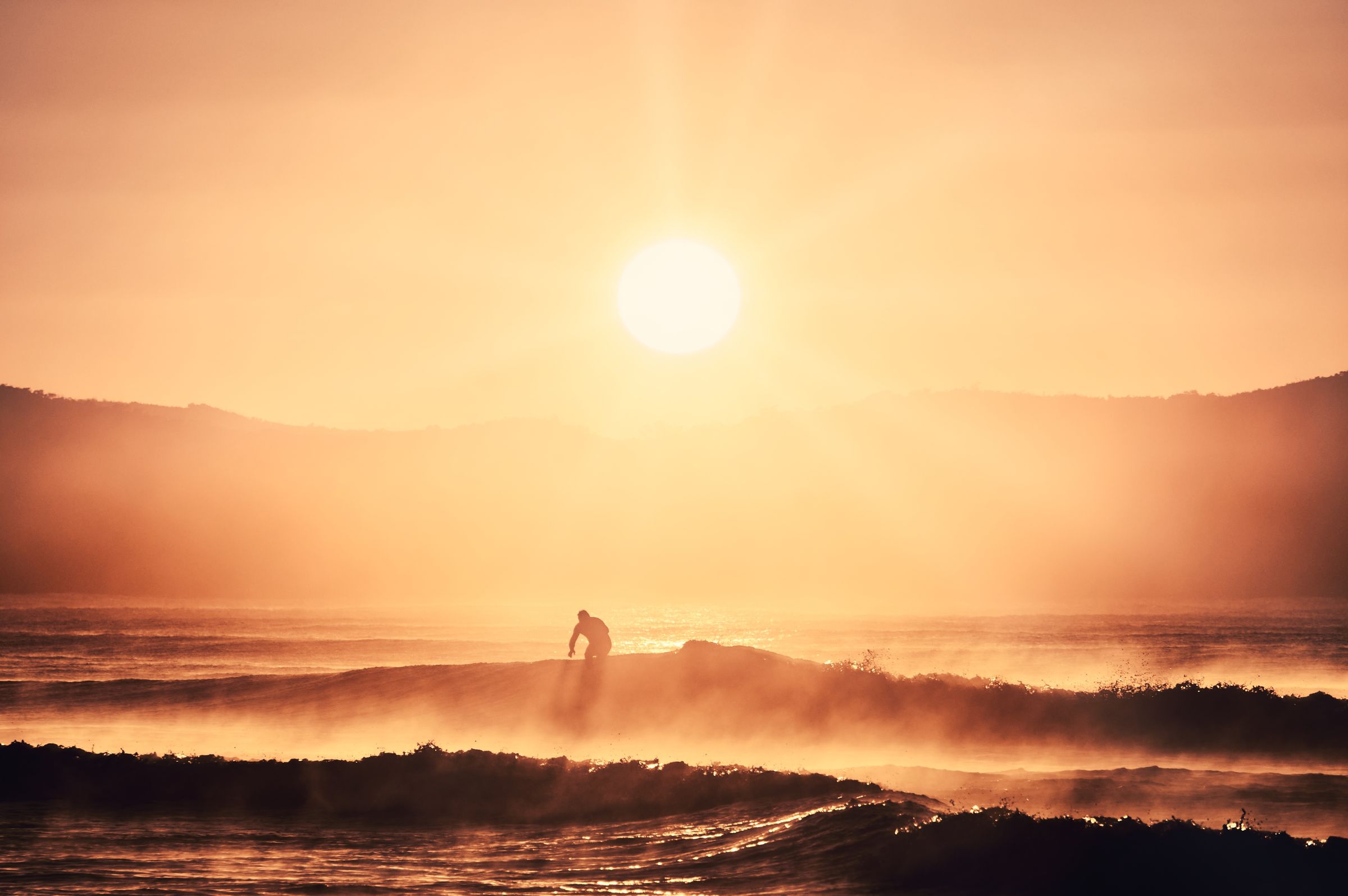
You open the windows before you open your eyes, because the sound got there first — a low, continuous roll that never quite repeats itself twice. Barefoot on cool tile, then barefoot on cooler sand, you walk down before breakfast for no better reason than the light asked you to. A handful of surfers are already out past the break, dark shapes against a sky still deciding what color it wants to be, paddling for a wave with the patience of people who know another one is always coming.
Coffee happens on a terrace above the cliffs, and somewhere below, a fisherman is checking his lines, unbothered by an audience, mending a net with the same motion his hands have made ten thousand times before. Lunch has no fixed hour and no particular urgency — a plate of something fried and something bright, a conversation that wanders, a second coffee no one planned on. Afterward, you find shade beneath a stand of sea grapes and read without finishing the chapter, which was rather the point.
By late afternoon the Atlantic has gone the color of something poured rather than painted, and by evening it has gone further still — brass, then copper, then a blue so dark it is nearly the same color as the sky. Dinner is outdoors, at a long table facing the water, and no one is the one who decides when it ends. It simply ends, the way the day did, on its own unhurried schedule.
Every Edition is arranged for the Collector who will live it, so nothing below is fixed to a time on a clock. What follows is a feeling, and the kind of moment the House tends to shape around it.
The water still and silvered, the wind not yet decided, a handful of surfers already past the break before the sky commits to a color.
Coffee on a terrace above the cliffs, a fisherman checking his lines below, the day beginning without asking anyone's permission.
A long lunch with no fixed end, shade under the sea grapes, a chapter left deliberately unfinished.
The water turning from blue to something closer to brass, and every conversation on the coast slowing down to match it.
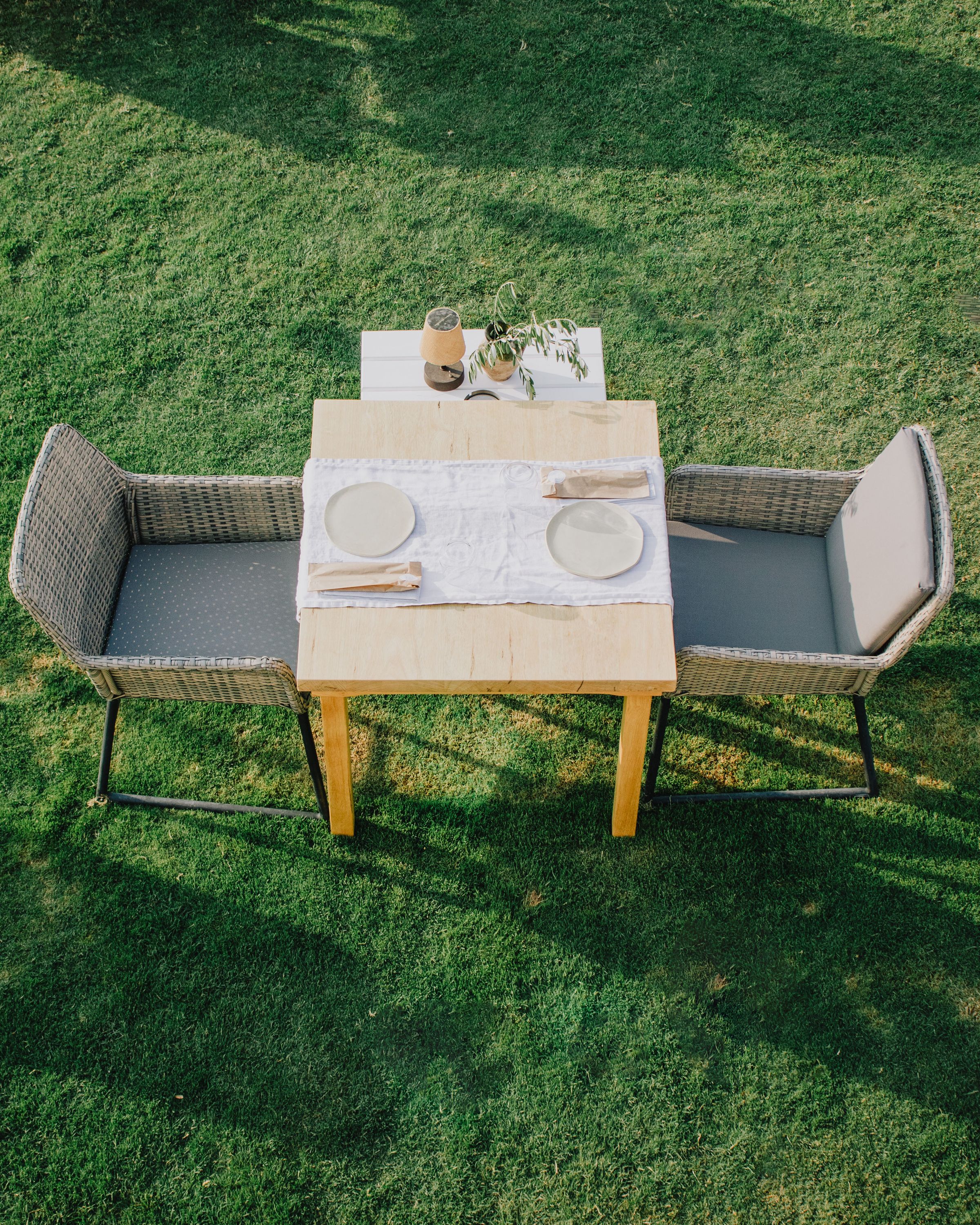
A long outdoor table facing the horizon, dinner that ends whenever it ends, and no one in a hurry to decide that for it.
The Atlantic teaches patience.
No one asks the tide to hurry. The House believes people shouldn't hurry either.
A schedule can be kept anywhere. What cannot be replicated is a coastline that simply refuses to be rushed — that returns the same wave, the same light, the same quiet, regardless of how much time anyone believes they have. That is the version of hospitality this Collection is actually built around: not filling a Collector's hours, but returning them.
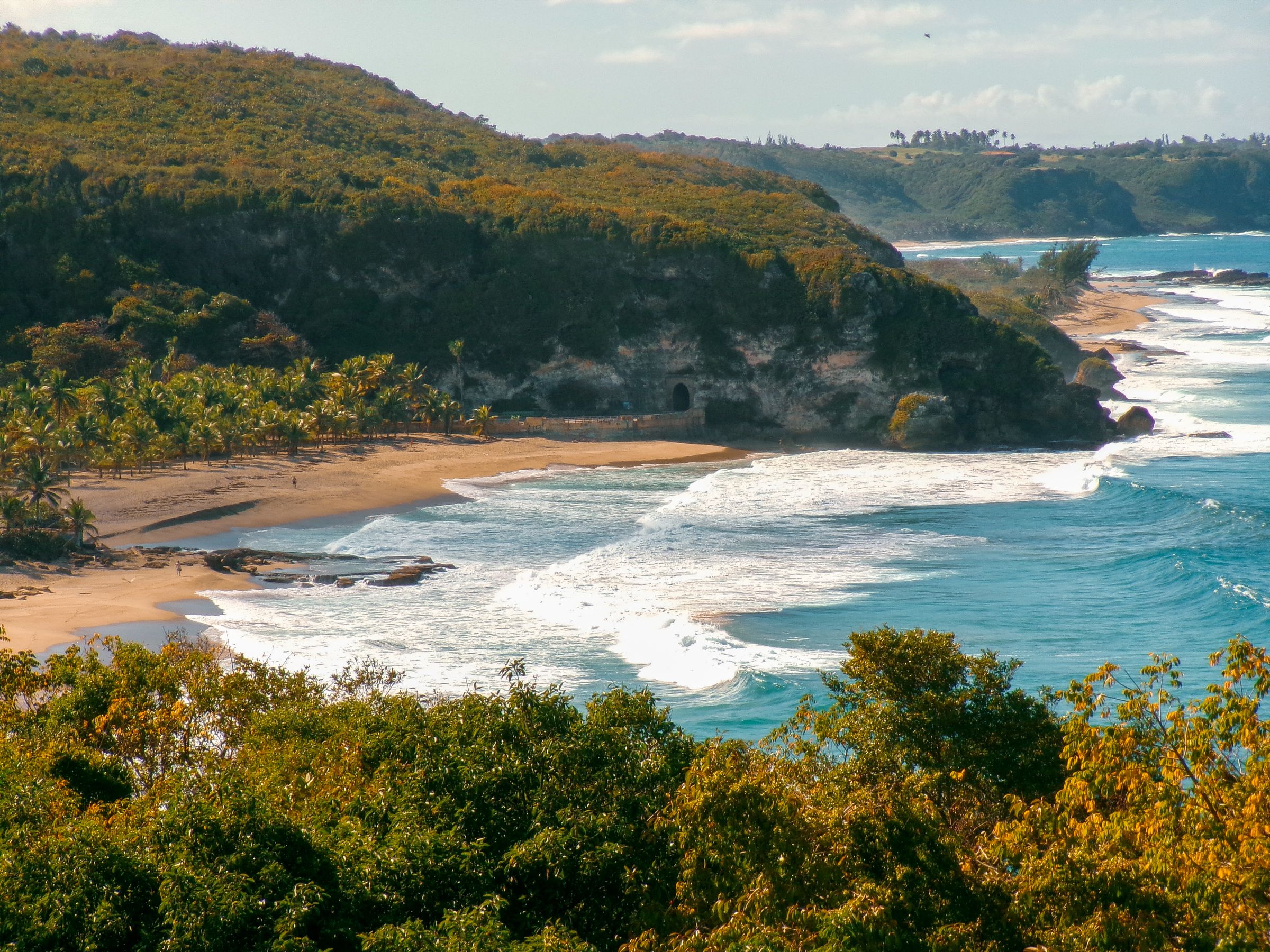
Every Collection is rewritten for each Collector, but these are a few of the places, people, and rituals that often find their way into this chapter. They are not selected because they are notable. They are selected because they belong to the story.
A quiet beach reached only on foot
No parking lot announces it and no sign points the way — a footpath through sea grapes that opens onto sand most Collectors never learn the name of.
Bring nothing you are not willing to carry back yourself. That is rather the arrangement.
A cliff overlook, best kept for early evening
A stretch of exposed limestone above the waterline where the whole coast seems to unfold at once, and the wind rarely lets anyone linger past a single sunset.
Arrive before the color changes. It changes quickly here, and only once.
A family-owned bakery, open before the surfers paddle out
Three generations behind the same counter, bread that sells out most mornings by nine, and no interest whatsoever in becoming anything larger than it already is.
Ask what came out of the oven last, not what is displayed. The two are rarely the same loaf.
A fisherman willing to share the morning's stories
He has read this water for longer than most Collectors have been alive, and he will tell you exactly as much as the morning's catch and his own mood allow — never more.
Do not arrive with a list of questions. Arrive with time, and let the conversation find its own current.
A surfboard craftsman working out of a small garage
Foam dust in the air, a radio playing low, and boards shaped by hand for local surfers who have been coming to him for decades, not for visitors passing through.
He will talk more freely about the ocean than about the boards. Let him.
A coastal café, chosen for its terrace rather than its menu
Plastic chairs, an unbeatable view, and coffee that is simply good enough — the kind of place locals return to for the horizon, not the kitchen.
Sit facing the water. Everything about this place is designed around that single decision.
A seafood restaurant chosen for atmosphere, not reputation
Whatever came off a boat that morning, cooked simply, served at tables close enough to the water to catch the spray on a windy evening.
Ask what they are not putting on the menu tonight. It is usually the better answer.
A hidden tidal pool, visible only at low tide
Carved into the rock over centuries, filled and emptied twice a day by a schedule no Collector controls, and easy to miss entirely if the House does not know to look for it.
The tide decides the hour for this one, not the itinerary.
These are represented as they most often appear, not as a guarantee. Season, weather, Collector interests, relationships, and availability — and, above all, the judgment of the House — determine what actually finds its way into any given Edition. The House curates; it does not template.
Where you stay is decided only after the House understands who is arriving. What follows are three kinds of Residences that often serve this Collection well — not a menu to choose from, but a sense of the range the House works within.
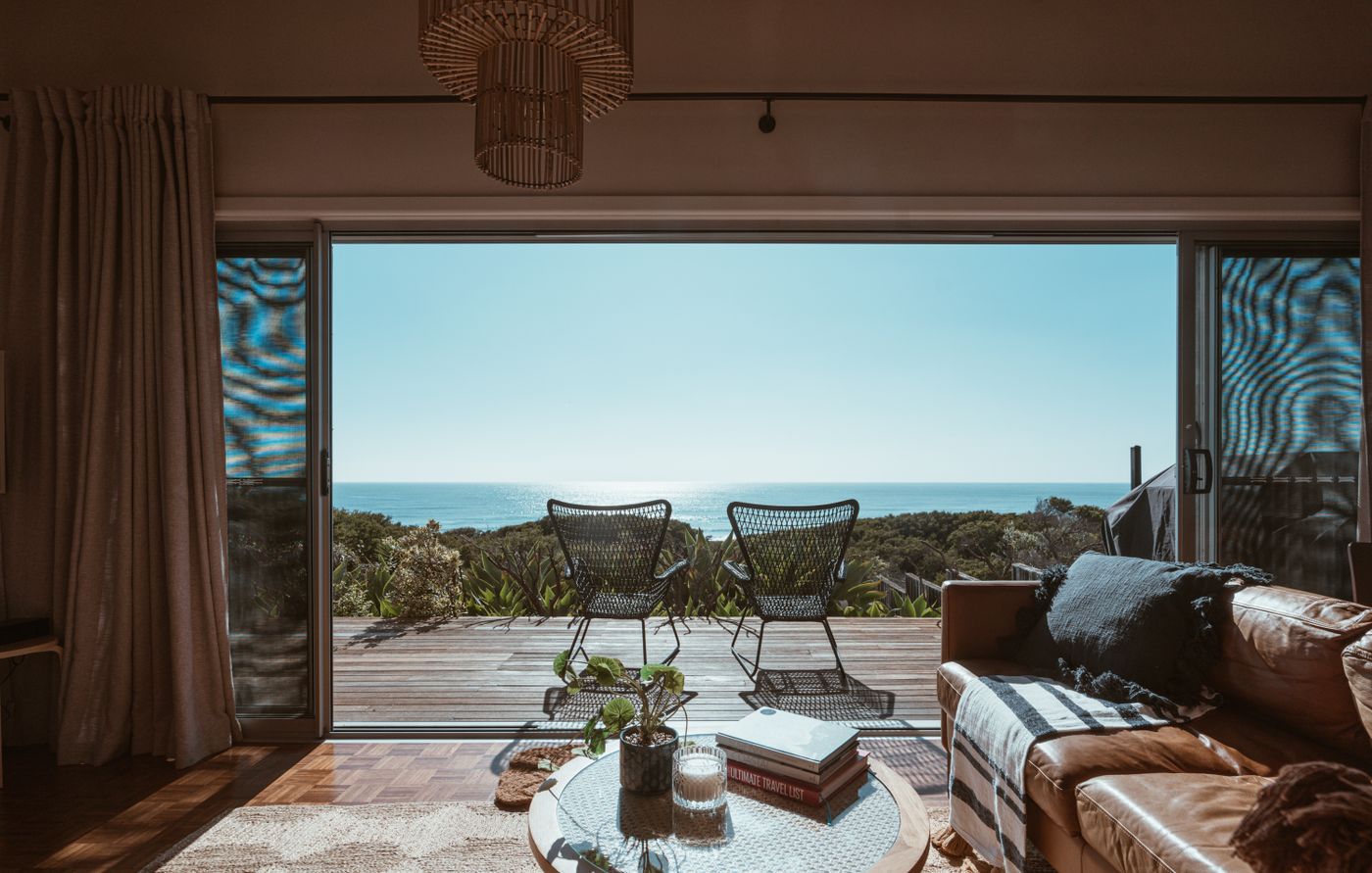
Set above the waterline, chosen for the sound of the waves reaching the windows before anything else does — a residence built to be woken by the ocean, not merely to overlook it.
Small enough that the staff learn your name by the second morning, with a terrace built for the specific purpose of watching the light change over dinner.
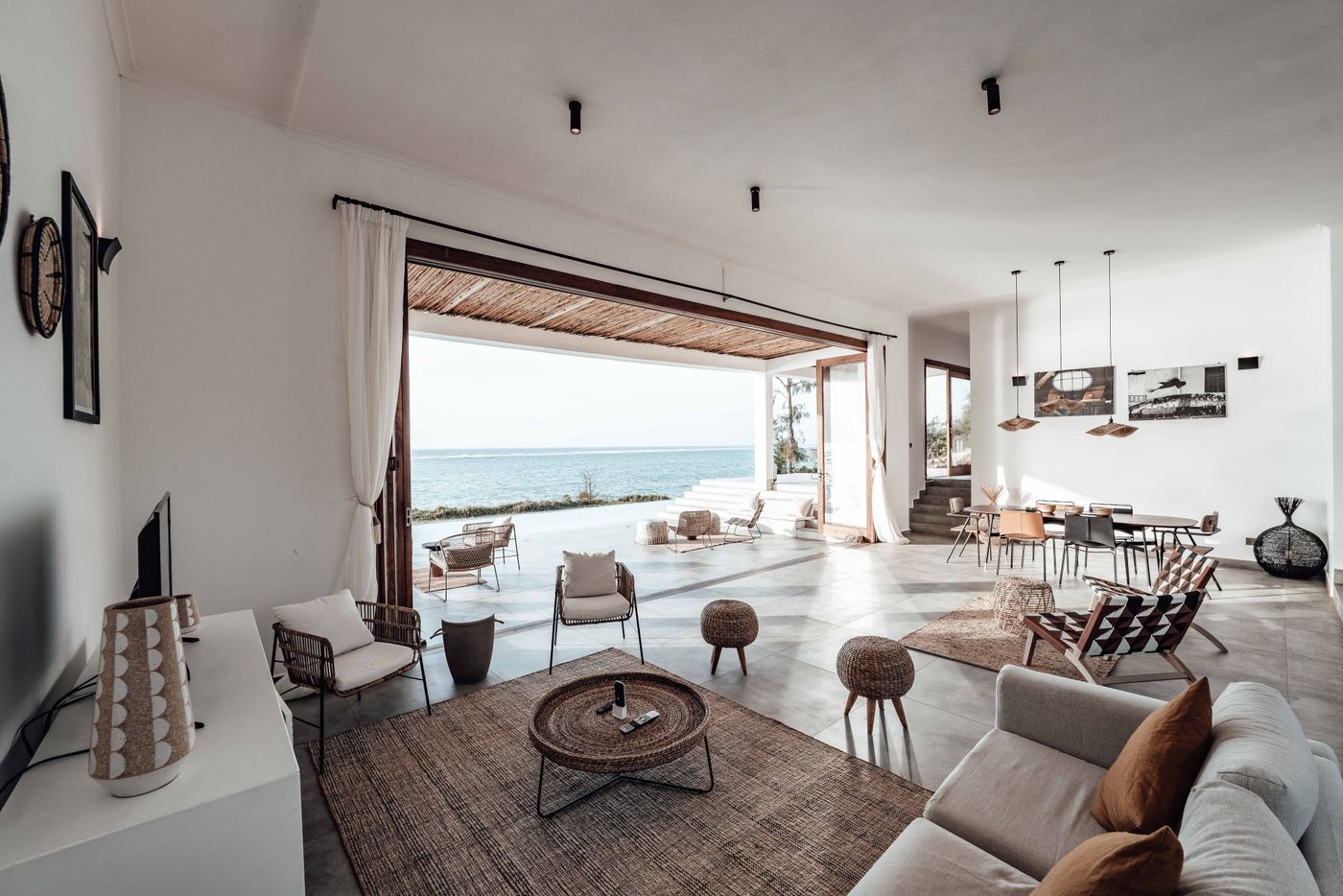
A House-arranged home entirely your own, chosen for a particular window, a particular stretch of coast, and the kind of privacy that lets a week unfold at its own pace.
This Collection is for Collectors who love open horizons, who find peace beside water, who wake early without being asked to. It is for those who prefer natural beauty over crowded attractions, who value a meal that takes two hours over one that takes twenty minutes, and who find something restorative — rather than merely scenic — in wind, salt, and silence.
It is for Collectors who love coastal architecture and the particular pleasure of reading with the windows open, and who suspect, correctly, that a coastline can teach a person something an itinerary never could.
If you believe life becomes richer when you begin following the rhythm of nature instead of the rhythm of a clock, this Collection was written for you.
The House has learned that the Atlantic never repeats itself.
Neither should a meaningful journey.
A small, changing set of references the House associates with this Collection — not a packing list, and not required reading. Simply what comes to mind.
An old bomba record, played low on a porch speaker — rhythm built for bare feet on wood, not for a dance floor.
A slim collection of tide-pool field notes — the kind of book written by someone who spent decades looking at the same small stretch of coast and never grew bored of it.
Whatever the boats brought in, grilled simply with lime and salt — a recipe that changes with the catch, on purpose, and is worse for being fixed to any single fish.
Salt, coconut oil, and warm sand — the particular combination that means a person has been outdoors, near water, since early morning.
A hand-shaped surfboard, resting fin-up against a wall — kept less as equipment than as evidence of a particular relationship with this water.
A quiet surf documentary, more interested in waiting than in wiping out — long stretches of horizon, and very little urgency about getting to the good part.
"We expected beautiful beaches. Instead we discovered a slower way of measuring a day."
From a Collector's letter, after a week on the Atlantic coast
Old San Juan, Before Sunrise
From an open coastline back to a city that keeps its own quiet hour.
Read the Collection →The Coffee Highlands
From sea level to the mountains, where the island keeps an entirely different rhythm.
Read the Collection →Hands of Puerto Rico
The fishermen, shapers, and bakers whose hands shape the mornings this Collection reveals.
Explore the Collection →The Journal
Further essays on the House's philosophy, the island, and the people who shape both.
Read the Journal →Every Collection begins as a conversation. The tide comes later.